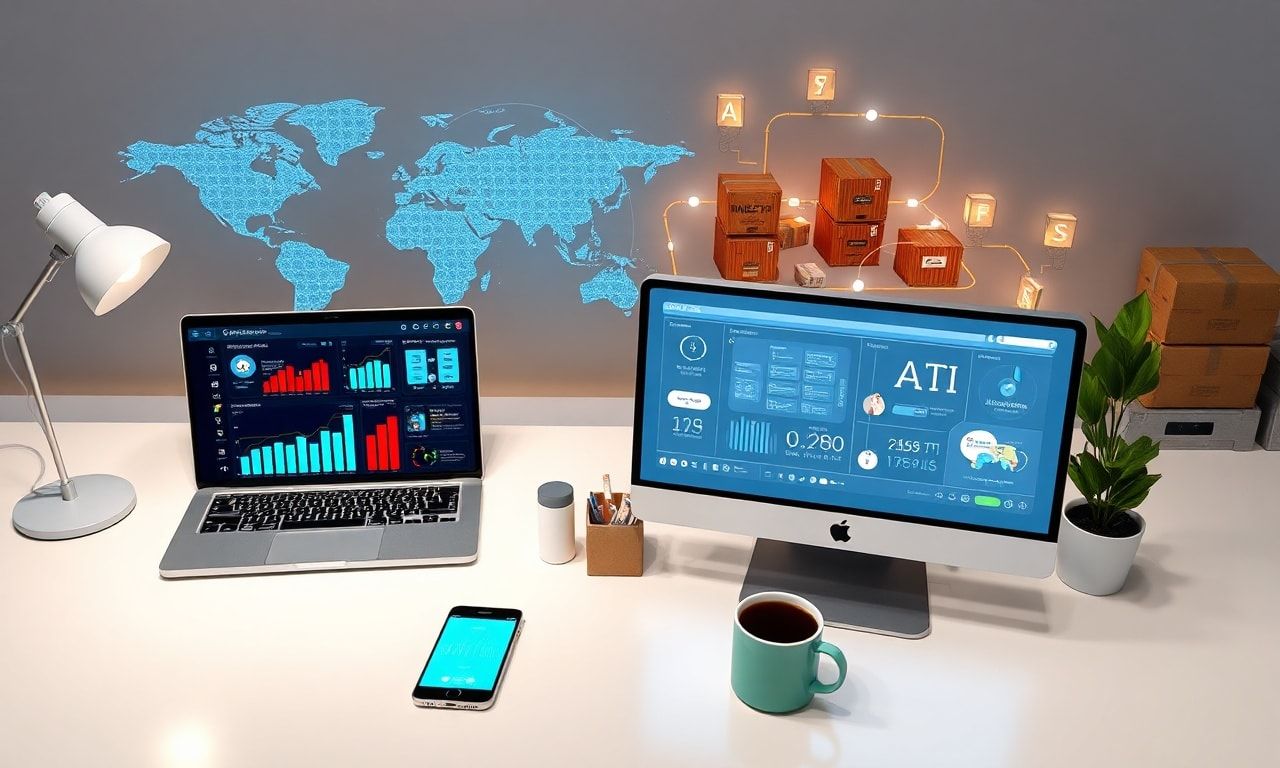
Complete Beginner Guide to Dropshipping: Integrating AI for Success
Introduction: The Modern Dropshipping Landscape
Dropshipping has revolutionized the e-commerce world, allowing entrepreneurs to sell products without holding inventory. For the complete beginner, this model offers a low-risk entry into online retail. You simply set up a store, partner with suppliers who handle inventory and shipping, and focus on marketing and customer service. While the barrier to entry is low, the competition is fierce. This is where strategic tool integration, particularly Artificial Intelligence (AI), separates thriving stores from stagnant ones. This guide will walk you through the foundational steps of starting a dropshipping business and introduce you to the powerful AI tools that can automate and optimize your operations from day one.
Understanding the Dropshipping Model
What is Dropshipping?
Dropshipping is a retail fulfillment method where you, the store owner, don’t keep the products you sell in stock. Instead, when you sell a product, you purchase the item from a third-party supplier who then ships it directly to the customer. Your profit is the difference between the wholesale price you pay the supplier and the retail price you charge the customer.
The Core Advantages for Beginners
- Low Startup Costs: No need to invest thousands in inventory upfront.
- Low Overhead: You don’t need a warehouse, packing staff, or complex logistics.
- Flexible Location: Run your business from anywhere with an internet connection.
- Wide Product Selection: You can test and offer a vast array of products from various suppliers without financial commitment.
The Key Challenges
- Lower Profit Margins: Due to intense competition and per-item costs.
- Inventory Complexities: Relying on a supplier’s stock levels can lead to selling out-of-stock items.
- Shipping Complications: Managing multiple suppliers can lead to longer delivery times and complex tracking.
- Supplier Errors: Mistakes in fulfillment directly impact your brand’s reputation.
Your Step-by-Step Launch Blueprint
Step 1: Niche Selection & Market Research
Your niche is your foundation. Instead of selling “everything,” focus on a specific, passionate audience (e.g., “eco-friendly yoga gear for travelers” vs. “sporting goods”). Use tools like Google Trends, Amazon Best Sellers, and social media platforms to validate demand.
Step 2: Sourcing Reliable Suppliers
Your supplier is your most critical partner. Platforms like AliExpress, SaleHoo, and Spocket are popular starting points. Vet suppliers rigorously: check reviews, order samples, and assess communication responsiveness.
Step 3: Setting Up Your E-Commerce Store
Platforms like Shopify, WooCommerce, and BigCommerce are built for dropshipping. They integrate easily with supplier apps and marketplaces. Focus on creating a professional, trustworthy, and user-friendly storefront.
Step 4: Crafting Your Marketing Strategy
Drive traffic through a mix of organic social media content (Pinterest, Instagram, TikTok), paid advertising (Facebook/Instagram Ads, Google Ads), and basic SEO for your product pages.
Step 5: Managing Operations & Customer Service
Be prepared to handle order issues, returns, and customer inquiries. Clear communication about shipping times is essential to manage expectations.
Elevating Your Business with AI Tools
Here is where we transition from a basic operational model to a scalable, optimized business. AI tools can automate the most time-consuming tasks, provide deep insights, and enhance creativity, giving you a significant competitive edge. For those looking to streamline and scale, here are some of the best AI tools for Etsy sellers and broader e-commerce entrepreneurs that are equally transformative for dropshippers.
1. AI for Product Research & Sourcing
- Tool Example: Jungle Scout (with AI-driven insights), Prisync
- Application: These tools analyze millions of data points to predict winning products. They can identify trends before they peak, assess competition, and estimate sales volume, taking the guesswork out of what to sell.
2. AI for Content & Listing Creation
- Tool Example: Jasper.ai, Copy.ai, ChatGPT
- Application: Crafting compelling product descriptions, blog posts, and ad copy is crucial. AI writing assistants can generate SEO-friendly, persuasive content in seconds, tailored to your brand voice. They can also create hundreds of product title and description variants for testing.
3. AI for Customer Service & Chatbots
- Tool Example: Zendesk Answer Bot, Freshdesk Freddy, ManyChat
- Application: AI-powered chatbots can handle up to 80% of routine customer inquiries (order status, return policies, sizing questions) 24/7, freeing you to focus on complex issues and improving customer satisfaction with instant responses.
4. AI for Visuals & Marketing Assets
- Tool Example: Canva Magic Studio, Adobe Firefly, Midjourney
- Application: Generate professional-looking product mockups, edit product photos (remove backgrounds, enhance quality), and even create custom graphics for ads and social media posts from simple text prompts.
5. AI for Pricing & Strategy Optimization
- Tool Example: Symbios, AppEagle
- Application: Dynamic pricing is key in competitive markets. AI tools can automatically adjust your prices based on competitor pricing, demand fluctuations, inventory levels, and your target profit margin, ensuring you remain competitive and profitable.
Implementing AI: A Practical Workflow for Beginners
- Start with One Area: Don’t get overwhelmed. Begin by integrating one AI tool into your weakest area. Is it writing listings? Start with an AI copywriter.
- Set Clear Goals: Define what success looks like. For a chatbot, it might be “reduce first-response time to under 2 minutes.”
- Train and Refine: AI tools learn. Provide feedback, use your brand’s tone guidelines, and refine the outputs. The AI is your assistant, not a complete replacement for your judgment.
- Analyze and Iterate: Use the data and time savings the AI provides to analyze your business performance and double down on what works.
FAQ: AI and Dropshipping for Beginners
Is dropshipping still profitable in 2024?
Yes, dropshipping remains profitable, but not as a “get-rich-quick” scheme. Success now hinges on strategic niche selection, building a real brand, exceptional customer service, and leveraging efficiency tools like AI to outperform competitors on operations and marketing.
As a beginner, do I really need to invest in AI tools immediately?
Not necessarily on day one. It’s wise to first understand the manual processes of running your store. However, once you have consistent sales (even 5-10 per week), investing in a key AI tool (like for customer service or copywriting) can be the catalyst that allows you to scale without being overwhelmed by workload.
What is the most important AI tool for a new dropshipper?
For most beginners, an AI-powered writing assistant (like Jasper or Copy.ai) offers the highest immediate return on investment. It directly impacts your store’s perceived quality (through professional listings), your SEO (through optimized content), and your marketing reach (through ad and social media copy), addressing several core challenges at once.
Conclusion: The Future is Automated
Starting a dropshipping business is an exciting journey into entrepreneurship. By following the foundational steps and building on a solid niche, you set the stage for viability. To truly accelerate your path to profitability and sustainability, integrating AI tools is no longer a futuristic concept—it’s a present-day necessity for competitive advantage. These tools act as your force multiplier, handling repetitive tasks, generating insights, and enhancing creativity. Begin your journey today, build manually to learn the ropes, and strategically implement the best AI tools for Etsy sellers and dropshippers to automate your path to success.
Ready to launch your dropshipping store with an intelligent edge? Start by exploring one AI tool in a key area of your business this week. Sign up for a free trial, experiment with its features, and document the time you save. Your future scalable business starts with a single automated task.