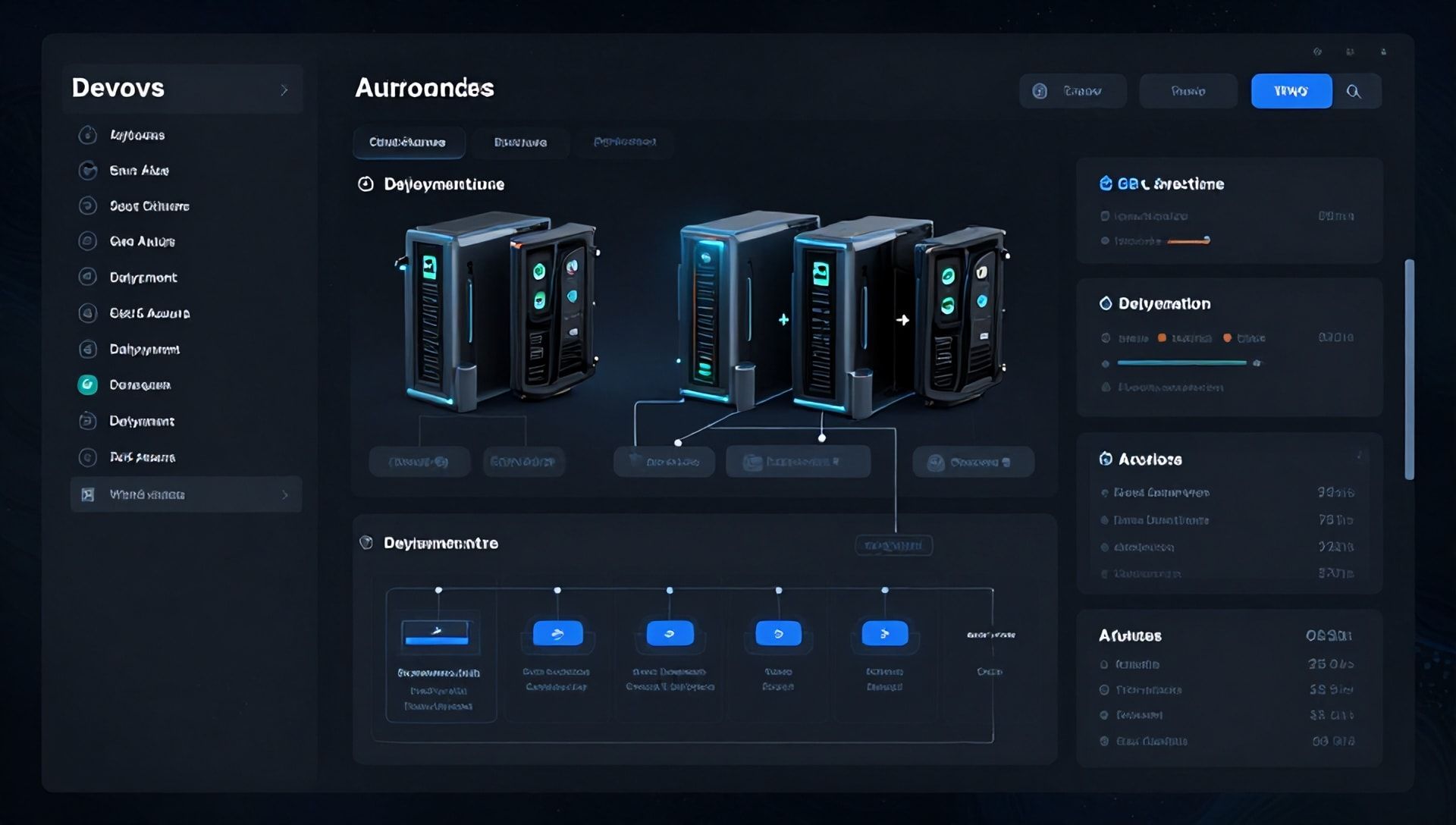
The modern DevOps engineer faces an impossible challenge. While development teams push code faster than ever, the burden of testing, security scanning, deployment verification, and incident response continues to grow. Many teams still rely on manual processes for critical workflows—leading to late-night pages, production incidents, and burnout.
But a fundamental shift is happening. AI agents specifically designed for DevOps workflows are emerging as 2026’s most significant infrastructure trend. Unlike simple automation scripts, these agents understand context, make decisions, and handle complex multi-step processes with minimal human intervention.
The DevOps Efficiency Trap
Most engineering teams have already captured the easy wins. Continuous integration pipelines are standard. Infrastructure as code is the norm. Yet the last mile of DevOps—testing, security verification, incident response—remains stubbornly manual.
Consider a typical deployment workflow. After code merges, someone needs to verify tests passed, check security scans, validate compatibility across environments, and monitor for issues. These tasks consume hours of engineering time daily. Worse, the repetitive nature leads to mistakes. Critical alerts get missed. Corners get cut under pressure.
Sound familiar? If your team still handles deployment verification manually, you’re not alone. The demand for faster releases has outpaced automation capabilities—until now.
Enter AI Agents: The New DevOps Stack
AI agents represent a paradigm shift from rule-based automation to intelligent, adaptive systems. Unlike traditional scripts that follow fixed paths, AI agents can understand natural language instructions, handle unexpected situations, and learn from feedback.
Several companies are leading this transformation with production-ready solutions now available.
SRE.ai: Natural Language DevOps

Backed by Y Combinator, SRE.ai launched in 2025 to address a specific pain point: enterprise DevOps complexity. Their AI agents connect to existing infrastructure across AWS, GCP, Azure, and ServiceNow through natural language instructions.
The approach is straightforward. Instead of writing complex scripts, engineers describe what they need: “Check all production deployments from the last 24 hours and flag any with security risks or metadata conflicts.” The agent handles the rest—querying systems, analyzing results, and presenting findings with recommendations.
This natural language interface dramatically lowers the barrier to automation adoption. Teams can automate workflows without specialized scripting knowledge. The agents also maintain context across conversations, understanding references to previous requests and ongoing issues.
Harness: AI-Powered Software Delivery
With a recent $240 million funding round valuing the company at $5.5 billion, Harness is doubling down on AI agents for the entire software delivery lifecycle. Their approach centers on a software delivery knowledge graph that provides context-aware pipeline generation.
Harness agents handle post-deployment processes that traditionally require human judgment: testing, verification, security scanning, and governance checks. The agents learn your organization’s policies and apply them consistently across all deployments.
The knowledge graph is particularly powerful. It understands relationships between services, dependencies, and deployment histories. When an agent encounters an issue, it can trace impacts across the system and suggest targeted fixes.
For organizations struggling with deployment bottlenecks, this intelligence layer promises to eliminate the manual verification that slows releases.
Amazon Frontier Agents: The Big Tech Response
Not to be outdone, Amazon previewed its Frontier Agents program in late 2025, with specific DevOps capabilities launching in 2026. The DevOps Agent focuses on automating testing for performance issues, compatibility validation across software and hardware environments, and incident prevention during code pushes.
Complementing the DevOps Agent are specialized tools like Kiro for autonomous coding and an AWS Security Agent for automated code reviews and fixes. Together, they form a comprehensive automation suite that operates independently after learning team workflows.
Amazon’s entry signals mainstream acceptance of AI agents for critical infrastructure tasks. When the cloud giant invests in autonomous DevOps, enterprises take notice.
How Teams Are Adopting AI Agents
Successful adoption follows a predictable pattern. Rather than attempting wholesale replacement of existing workflows, leading teams start with specific pain points and expand gradually.
Phase 1: Identify Repetitive Tasks
Start by auditing your current DevOps processes. Look for workflows that follow consistent patterns but require human judgment:
- Post-deployment verification checks
- Security scan result analysis
- Incident response triage
- Configuration drift detection
- Performance regression analysis
These are ideal candidates for AI agent automation.
Phase 2: Pilot with Limited Scope
Choose one workflow for initial implementation. SRE.ai’s natural language interface makes this approachable for teams without extensive scripting expertise. Harness provides more sophisticated orchestration for complex enterprise environments.
During piloting, maintain parallel manual processes. Compare agent performance against human execution to build confidence and identify edge cases.
Phase 3: Expand and Integrate
Once initial pilots prove successful, expand to adjacent workflows. The key is maintaining integration with existing systems. Both SRE.ai and Harness emphasize compatibility with popular DevOps tools and cloud platforms.
For teams already using AI automation for sales teams, the transition to DevOps agents follows similar patterns—start small, measure impact, scale gradually.
Tools to Consider
The AI agent landscape for DevOps includes options for various team sizes and requirements:
For Enterprise Teams:
- SRE.ai: Best for organizations with complex multi-cloud environments seeking natural language automation
- Harness: Ideal for teams needing comprehensive software delivery automation with strong governance controls
For AWS-Centric Organizations:
- Amazon Frontier Agents: Native integration with AWS services, suitable for teams already committed to the AWS ecosystem
For Open Source Enthusiasts:
- LangChain Agents 2.0: Flexible framework for building custom DevOps agents
- CrewAI: Collaborative agent orchestration for complex multi-step workflows
Common Implementation Challenges
Adopting AI agents isn’t without obstacles. Teams report several recurring challenges:
Trust and Verification: Engineers naturally distrust autonomous systems with production access. Successful implementations include human-in-the-loop checkpoints for critical decisions. For guidance on handling agent failures, see our guide on troubleshooting AI agent issues.
Security Concerns: Granting AI agents access to production systems raises valid security questions. Leading solutions include fine-grained permission controls, comprehensive audit logging, and integration with existing identity systems.
Integration Complexity: Legacy systems and custom tooling often resist automation. Plan for integration work and consider whether GPT-5.4 computer control for automation might bridge gaps where APIs are limited.
The Bottom Line

AI agents for DevOps have moved from experimental technology to production-ready tools. Companies like SRE.ai, Harness, and Amazon are delivering real solutions that address the repetitive, error-prone tasks consuming engineering time.
The trend is clear: agentic automation is becoming standard infrastructure. Teams that adopt early gain competitive advantage through faster releases, fewer incidents, and improved engineer satisfaction.
Your 30-Day Action Plan
Ready to explore AI agents for your DevOps workflows? Here’s a practical starting plan:
Week 1: Assessment
- Audit current DevOps processes for repetitive manual tasks
- Document time spent on deployment verification, security scans, and incident response
- Identify your top three automation candidates
Week 2: Research
- Evaluate SRE.ai, Harness, and Amazon Frontier Agents against your requirements
- Request demos or trial accounts
- Assess integration requirements with your existing toolchain
Week 3: Pilot
- Implement one agent for a single, well-defined workflow
- Run parallel with existing manual process
- Document results, edge cases, and team feedback
Week 4: Evaluate and Plan
- Measure pilot results against baseline metrics
- Decide on broader adoption
- Plan rollout to additional workflows
The DevOps landscape is transforming. AI agents aren’t replacing engineers—they’re eliminating drudgery so teams can focus on building better systems. The question isn’t whether to adopt this technology, but how quickly you can start.
Stay ahead of the curve. The teams mastering AI agents today will define DevOps best practices tomorrow.